
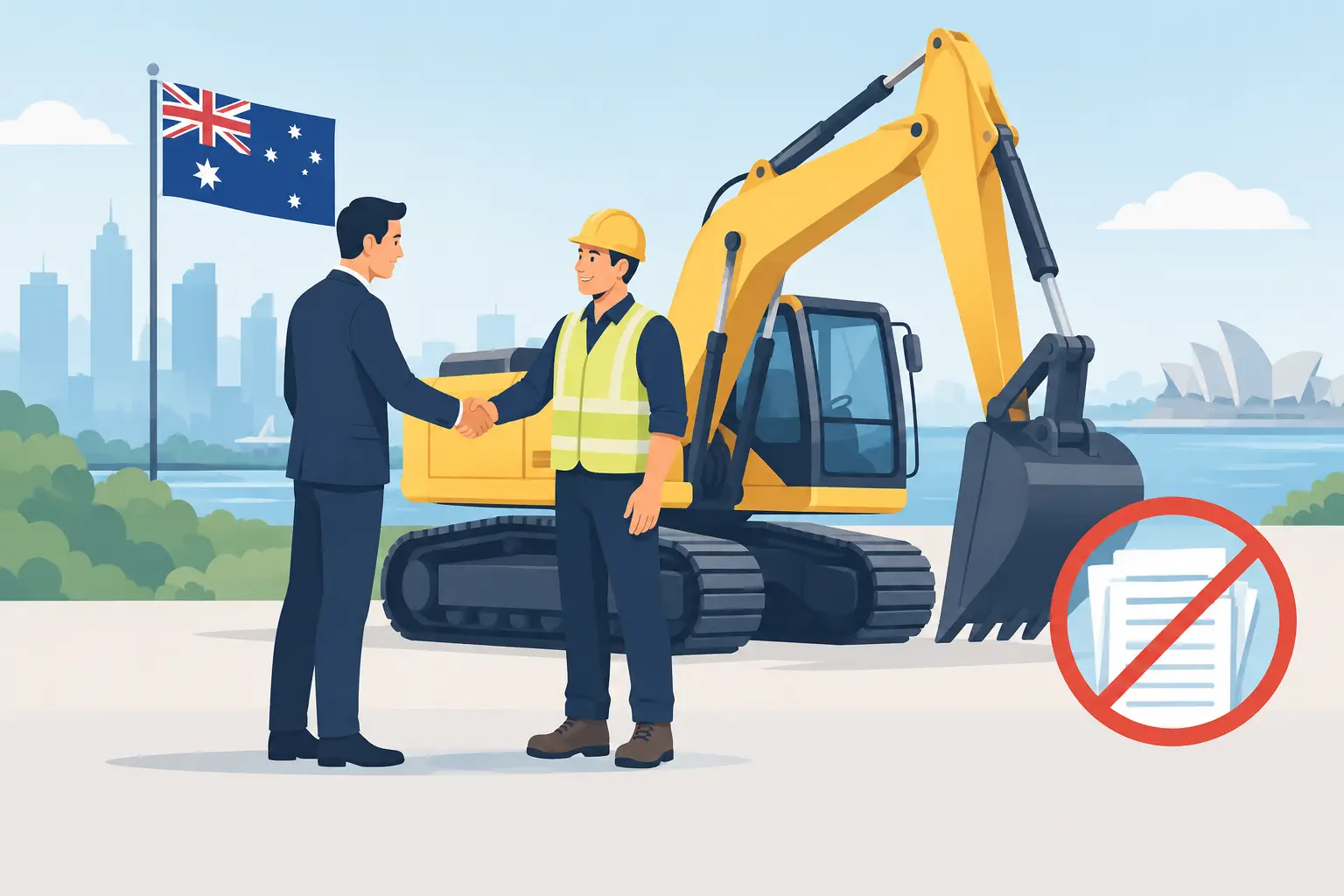
A grader with a signed contract cannot keep a civil job moving while a bank waits for two years of financials. A transport operator cannot leave a replacement prime mover in the yard while a lender works through a tax-return checklist. Leasing machinery without tax returns can be a practical funding path where the asset is needed now, the business can demonstrate its capacity to pay, and conventional bank documentation does not tell the full story.
For Australian operators, the key is understanding what “no doc” means in machinery finance. It rarely means no assessment. It means the lender may assess the deal using different evidence, with greater emphasis on the machinery, the deposit or trade-in, the borrower’s credit profile, bank statements, business activity and available property security where required.
When leasing machinery without tax returns makes sense
This type of finance is commonly considered by established businesses with irregular income, newly formed entities, contractors paid project by project, family businesses with financials not yet finalised, and operators whose tax returns do not reflect their current trading position.
It can also suit a purchaser acting quickly on a machinery auction, a dealer sale, a replacement asset after breakdown, or an expansion tied to a secured work pipeline. In these situations, waiting for year-end accounts or a mainstream credit decision can cost more than the finance itself through lost production, hire costs or a missed contract.
Machinery leasing may be available for equipment such as earthmoving plant, excavators, cranes, forklifts, agricultural machinery, manufacturing equipment, trailers, trucks and specialised commercial assets. The asset needs to be identifiable, commercially useful and acceptable to the lender. Newer equipment with a clear resale market generally provides more options than highly specialised, aged or imported machinery.
A lease structure allows a business to use the asset while making agreed repayments over a fixed term. Depending on the facility and lender, there may be a residual or balloon amount at the end of the term. The right structure depends on cash flow, expected asset life, GST treatment and whether the business intends to retain, refinance or upgrade the machinery later.
What lenders assess instead of tax returns
A no-doc application is not a free pass around credit risk. Lenders still need a credible view of repayment capacity and asset security. The difference is that they may rely on a more commercial mix of documents rather than completed company and personal tax returns.
Bank statements can show turnover, regular customer receipts, wages, rent, existing finance commitments and the practical cash flow of the business. An accountant’s letter, BAS statements, current management figures, contracts, invoices or a pipeline of confirmed work can also help establish the trading position. For a contractor, evidence of a long-term principal agreement or recurring site work may carry real weight.
The proposed asset matters as well. Lenders will consider its purchase price, age, condition, make, model, serial number and likely resale value. A dealer invoice and independent valuation may be needed, particularly for used or higher-value machinery. A sensible deposit can improve the strength of an application because it reduces the lender’s exposure and shows the borrower has funds committed to the purchase.
Credit history is considered, but an adverse listing or past arrears does not automatically end the discussion. Context matters. A resolved issue caused by a one-off project delay is different from ongoing unpaid liabilities or repeated defaults. Private and specialist lenders can often take a more practical view where the current deal is well supported.
Property security can broaden the options
For larger machinery acquisitions, difficult credit profiles or equipment with limited resale value, additional security may be requested. This could include residential or commercial property, provided the funding is demonstrably for business purposes. A first mortgage, second mortgage or caveat loan may sit alongside asset finance where appropriate.
Using property equity can create a different funding outcome, but it also increases the stakes. Borrowers should understand exactly what security is being offered, the loan term, repayment obligations, fees and the consequences of default before proceeding. The most suitable structure is not always the one with the lowest advertised rate. It is the one that funds the asset on workable terms without creating unnecessary pressure elsewhere in the business.
A practical way to prepare your application
Speed comes from presenting a clear deal, not from sending a lender a one-line request for finance. Before seeking quotes, identify the machinery, supplier, purchase price, amount required, desired term and whether a deposit, trade-in or residual is proposed.
Be ready to explain how the equipment will produce income or reduce operating costs. A new excavator might support a contracted civil package. A CNC machine may replace outsourced manufacturing. A replacement truck may protect an existing freight route. This commercial explanation helps a lender see the purpose behind the repayment plan.
You should also have recent business bank statements available and disclose existing loans, tax obligations, arrears or credit events early. Surprises discovered late in the process can delay settlement or change terms. Direct disclosure allows a finance broker to approach lenders whose policy is better suited to the file.
Where machinery is being bought privately or at auction, allow for extra due diligence. The lender may require proof of ownership, a PPSR check, valuation evidence, insurance and confirmation that the asset is free of prior encumbrances. Auction deadlines can be tight, so finance approval should be explored before bidding where possible.
The trade-offs to consider
Leasing machinery without tax returns can be faster and more flexible than a standard bank application, but it is not automatically cheaper. A specialist lender may charge a higher rate, establishment fee or require a larger deposit to offset the reduced documentation and perceived risk. Some facilities may also have shorter terms or residual requirements that lift the final repayment.
For that reason, compare the full structure rather than focusing only on the weekly or monthly figure. Check the total amount payable, whether repayments are in advance or arrears, any balloon payment, early payout terms, documentation fees and insurance requirements. If cash flow is seasonal, ask whether repayments can be structured around the business cycle. Not every lender will offer that flexibility, but it is worth addressing before documents are issued.
It is also worth separating a genuine documentation issue from a capacity issue. If the business cannot comfortably service the facility even with its current contracts, changing lenders will not fix the underlying problem. A shorter-term working-capital facility, a lower equipment budget, additional equity or a staged purchase may be more commercial.
Choosing the right funding route
Bank equipment finance may still be the best fit for a business with strong financials, clean credit and time to wait for a standard approval. It can offer competitive pricing and straightforward terms. However, where tax returns are unavailable, outdated or unrepresentative of current trading, a specialist asset lender or private funding structure may provide a more realistic path.
The benefit of working through a broad lender panel is that the deal can be matched to the asset, borrower profile and urgency rather than forced into one bank’s policy. No Doc Loans can assess the machinery purchase alongside available business cash flow and property equity, then seek suitable options from its lender network.
The strongest applications are usually not the ones with the most paperwork. They are the ones that clearly show what is being bought, why it is needed, how it will support the business and how the repayments will be met. If the machinery is commercially sound and timing matters, start the finance discussion before the opportunity passes.








Leave A Comment