

A new excavator sitting idle while a bank works through another round of paperwork can cost far more than the interest on finance. Equipment leasing gives Australian businesses a practical way to put income-producing assets to work without committing a large amount of working capital on day one.
For operators buying machinery, vehicles, medical equipment, technology or specialised plant, the right structure is not simply about the lowest advertised rate. It is about preserving cash flow, matching repayments to the useful life of the asset and retaining enough financial capacity to take the next opportunity when it arrives.
How equipment leasing works
Under an equipment lease, a financier purchases the asset and leases it to your business for an agreed term. Your business makes regular lease payments in exchange for use of the equipment. At the end of the term, the available options depend on the lease structure and lender agreement. You may return the asset, upgrade it, extend the arrangement or negotiate to acquire it.
This differs from a chattel mortgage, where your business generally owns the asset from the outset and the lender takes security over it. Neither option is automatically better. A chattel mortgage can suit a business that wants ownership and expects to retain the equipment long term. Leasing can make more commercial sense where equipment changes quickly, capital is better used elsewhere or a business wants a defined replacement cycle.
For example, a civil contractor may lease a fleet vehicle or item of plant while keeping available funds for labour, materials and mobilisation costs on a newly awarded contract. A medical practice may use leasing to update diagnostic equipment without drawing heavily on cash reserves needed for fit-out, wages and marketing. The finance needs to reflect the asset and the operating plan behind it.
When leasing can be the right funding structure
Equipment leasing is commonly used where an asset will directly generate revenue or reduce an immediate operating constraint. That may include construction machinery, manufacturing lines, commercial vehicles, agricultural equipment, hospitality fit-outs, office technology and specialised healthcare assets.
The key benefit is capital efficiency. Rather than paying the full purchase price upfront, a business can spread the cost across a term that is broadly aligned with the period it expects to use the equipment. This can make budgeting more predictable and leave funds available for stock purchases, tax obligations, payroll or project costs.
Leasing can also suit businesses that want flexibility at the end of the term. If the asset is likely to become outdated, or its use is tied to a finite contract, retaining an ownership position may not be the priority. In other cases, the business may know it wants the asset permanently, making a chattel mortgage or hire purchase arrangement worth comparing.
The trade-off is that lease terms, end-of-term obligations and any residual value must be understood before signing. A lower monthly payment may be achieved by leaving a larger residual, but that creates a larger amount to deal with at the end of the agreement. Lower repayments are useful only if the final obligation fits the business’s expected cash position and the asset’s realistic value.
Cash flow matters more than the sticker price
The purchase price of equipment is only one part of the decision. Consider delivery, installation, insurance, maintenance, fuel or power costs, registration where relevant, operator training and downtime. An asset that improves capacity but strains the operating budget is not automatically a good acquisition.
Lenders will also look at whether the equipment is readily saleable and how it supports the business. Standard assets such as late-model trucks, yellow goods and common machinery are generally easier to finance than highly customised or imported equipment with a narrow resale market. That does not mean specialist assets cannot be funded, but the deposit, term and security position may need to be structured differently.
What lenders assess for equipment leasing
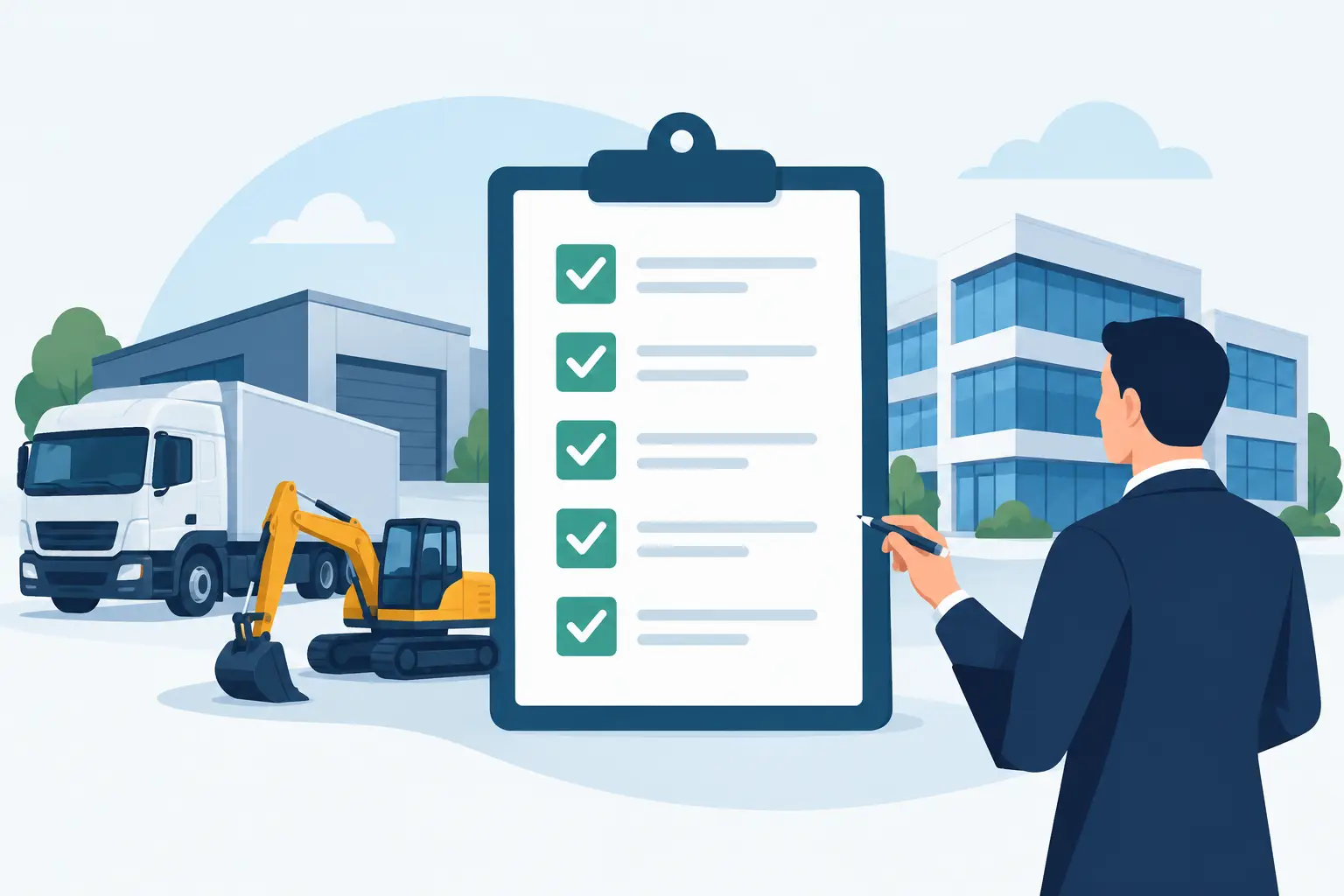
Asset lenders assess the asset itself alongside the strength of the borrower. The exact requirements vary, but a clear application usually identifies the equipment, supplier, purchase price, GST treatment, expected use and the term required.
For established businesses, trading history, bank statements, financials and servicing capacity may be relevant. For newer operators, lenders may place more weight on the director’s experience, contract pipeline, deposit contribution and available security. A business with a short trading history is not necessarily out of the running if there is a credible revenue story and the equipment has sound resale value.
Credit issues can affect pricing and lender appetite, but they should not end the conversation. Private and non-bank funders can take a more practical view where there is a clear business purpose, a well-supported asset purchase and additional security available. Property equity, for example, may help support an equipment acquisition where a mainstream lender has declined the application due to policy, tax debt, impaired credit or a recently established trading entity.
Where real estate security is available, the funding conversation can extend beyond a standalone asset lease. A business may need to acquire equipment, release cash from retained stock or cover a short-term gap before a contract payment lands. In that situation, a broader facility secured by commercial or residential property may provide more useful flexibility than forcing every requirement into one asset-finance product.
Compare the structure, not just the repayment
Before committing to equipment leasing, compare it against the alternatives on a like-for-like basis. Ask whether the quoted repayment includes GST, whether there is a balloon or residual, what happens if the asset is sold early, and whether the agreement permits an upgrade or substitution if business needs change.
Also check the practical conditions around the asset. Some financiers require comprehensive insurance, scheduled servicing or restrictions on moving equipment interstate or using it in remote locations. These conditions are normal risk controls, but they need to work with the way your operation actually runs.
Tax treatment can be a factor, particularly for GST-registered businesses, but it should not be the sole reason to choose a structure. Lease payments and GST treatment can vary according to the agreement and your circumstances. Obtain advice from your accountant before relying on a particular tax outcome or instant asset write-off measure.
Avoid financing a problem asset
A good finance approval does not fix a poor equipment purchase. Before accepting a supplier quote, verify the asset’s condition, serial numbers, warranty, service history, lead time and resale prospects. For used plant and machinery, an independent inspection can be money well spent, particularly where the equipment will be critical to meeting a project deadline.
Be cautious with deposits paid before funding is confirmed. Supplier terms should be clear about whether deposits are refundable, what occurs if delivery is delayed and whether the final invoice matches the finance approval. Timing matters when equipment is needed for a settlement, mobilisation date or seasonal opportunity.
A practical path to competitive equipment finance
The most effective applications begin with a complete picture rather than a rate-only enquiry. Have the supplier quote ready, explain how the asset will be used and identify whether the priority is the lowest repayment, a fast settlement, a longer term, limited upfront contribution or flexibility at the end of the agreement.
It also helps to be upfront about complications. A prior default, ATO arrangement, uneven trading period or recently formed company can be addressed far more effectively when it is disclosed early. The right lender match often depends on these details, particularly for asset purchases alongside property development, construction work or a business expansion.
No Doc Loans can assess equipment leasing requirements against a panel of Australian funding partners and consider whether a standalone asset facility or a property-backed structure better supports the transaction. The goal is not to force a standard product onto a non-standard business situation, but to obtain terms that support the next commercial move.
The useful question is not simply whether your business can lease the equipment. It is whether the proposed finance leaves you with enough cash, flexibility and certainty to make the equipment earn its keep from the first day it arrives.







Leave A Comment