
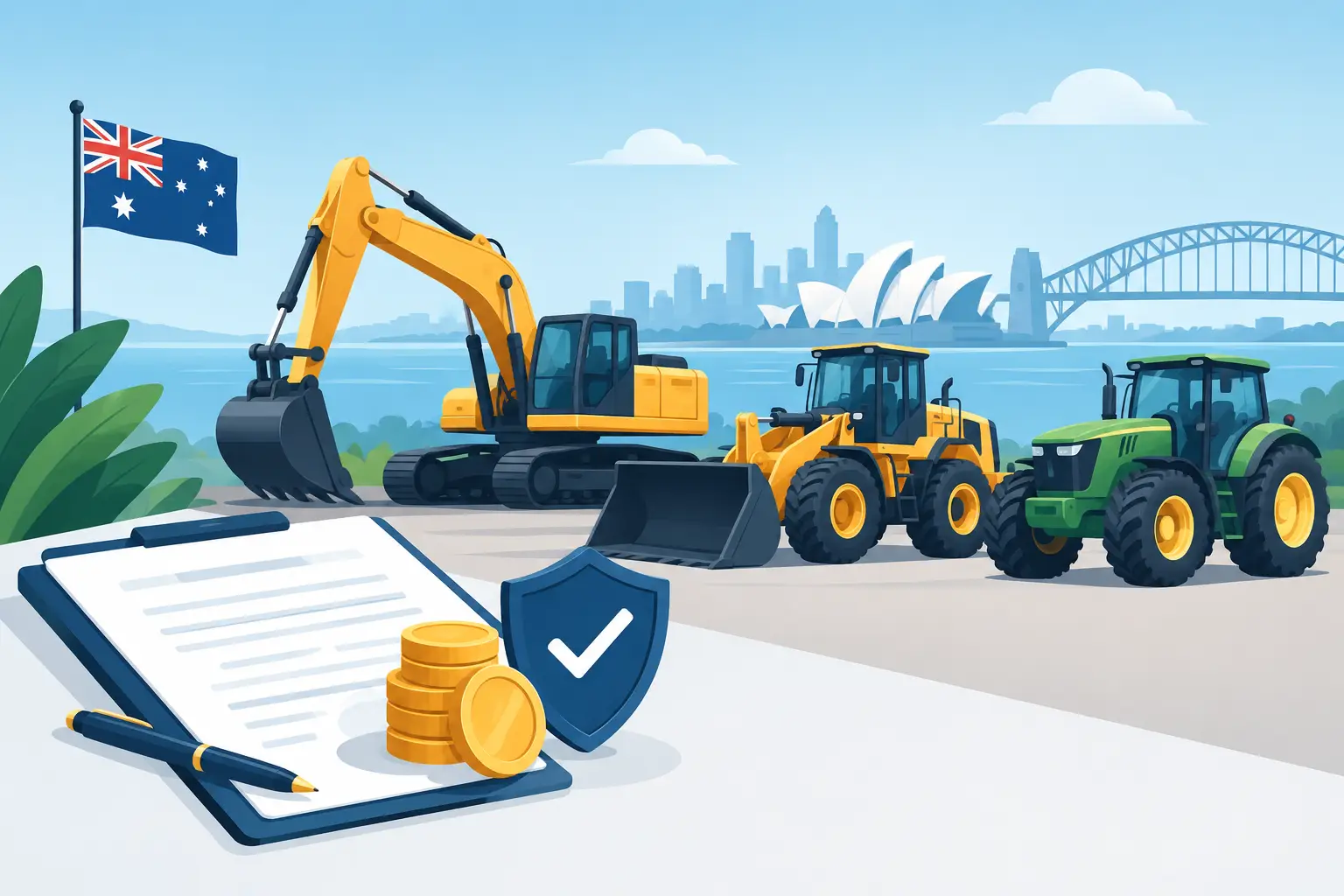
A delayed excavator, new CNC machine or replacement harvester can hold up contracts that are already on the books. Knowing how to secure machinery finance before you commit to an asset puts you in a stronger position with vendors, protects working capital and gives your business a realistic path to settlement.
For Australian operators, the right facility depends on more than the price of the machine. Lenders assess the asset, its resale value, the age and condition of the equipment, your business cash flow and the security available. When a bank process is slow or the transaction sits outside standard policy, private and specialist asset lenders can provide another path forward.
Start with the machinery and the commercial purpose
Machinery finance is generally used to acquire income-producing equipment for a business. That may include earthmoving plant, agricultural machinery, manufacturing equipment, transport assets, mining equipment, forklifts, cranes, medical equipment or specialised workshop machinery.
Before approaching lenders, be clear about what is being purchased and why. A lender will want to see that the asset has a genuine commercial use, whether it is replacing ageing equipment, allowing you to fulfil a new contract, expanding production capacity or reducing outsourced hire costs. A well-defined purpose helps support the requested loan amount and repayment structure.
New machinery is usually easier to fund because its value is clearer, warranties may apply and the lender can rely on a stronger resale market. Used machinery can still be financed, but the age, hours of use, maintenance history and market demand become more important. Highly specialised equipment may require a larger deposit or additional property security because there are fewer buyers if it needs to be sold.
A formal quote or tax invoice should identify the supplier, make and model, serial number where available, purchase price, GST treatment and any accessories included. If you are buying privately or at auction, allow time for the lender to review the asset and vendor arrangement. These transactions can be workable, but they often need more diligence than a purchase from an established dealer.
Choose the machinery finance structure that suits cash flow
The cheapest headline rate is not always the best outcome. The repayment profile, deposit requirement, residual or balloon payment and security package can have a greater impact on your business over the term of the loan.
A chattel mortgage is commonly used when a business buys machinery and wants to own it from settlement. The financier takes a mortgage over the equipment, while the borrower may be able to claim eligible GST input tax credits and depreciation subject to professional tax advice. This structure can suit established businesses with clear financials and a strong asset purchase.
A finance lease may suit businesses that prefer regular payments and may want flexibility at the end of the term. A commercial hire purchase arrangement is another ownership-focused option. For equipment that will be upgraded regularly, an operating-style rental or lease structure can be worth considering, depending on the lender and type of machinery.
Residual or balloon payments can reduce monthly instalments by leaving an agreed amount payable at the end of the term. That can assist cash flow for a contractor waiting on staged project payments. The trade-off is that you need a credible plan to refinance, sell, trade in or pay out the residual at maturity. Setting an unrealistic balloon simply to reduce repayments can create pressure later.
For some borrowers, the machinery itself will not provide enough security. This is more common with older plant, unusual assets, machinery bought from a distressed sale or equipment with a low resale value. In those cases, a lender may seek a director guarantee, a general security agreement over the business, or real estate security through a first mortgage, second mortgage or caveat loan. Property equity can materially improve the available loan amount and create options where a standalone asset facility is not suitable.
Prepare the information lenders actually need
Fast approvals are usually the result of complete information, not shortcuts. The more clearly you present the transaction, the easier it is for a lender to assess the risk and issue terms that can be relied on.
For a straightforward machinery purchase, lenders commonly request identification for directors or trustees, ABN and entity details, the machinery quote, recent business bank statements and evidence of your capacity to meet repayments. If your business trades through a company or trust, provide the correct entity documents from the start. Mismatched purchaser names, trust details or supplier invoices are a common cause of settlement delays.
Where the application is larger or more complex, expect requests for management accounts, BAS statements, tax returns, an asset and liability position, contract pipeline information and details of existing finance. A business with variable turnover should explain the variation rather than leave the lender to make assumptions. For example, civil contractors may have seasonal revenue, while manufacturers may carry higher stock and payroll costs before a major order is completed.
If the proposed repayments will be supported by a signed contract, purchase order or long-term customer relationship, include that evidence. It does not replace serviceability, but it can give context to an expansion purchase. Similarly, a clear explanation of how the machinery will generate revenue or save operating costs can strengthen the application.
Know what affects approval and pricing
Lenders consider both the asset and the borrower. Strong trading history, consistent account conduct, an appropriate deposit and a readily saleable machine generally produce more competitive options. However, a less conventional application is not automatically a declined application.
Previous credit issues, tax arrears, recent business restructuring or incomplete financials can narrow the mainstream bank market. The key is to disclose the position early and explain what has changed. A once-off default caused by a delayed project payment is assessed differently from ongoing unpaid liabilities or repeated dishonours. Trying to hide issues tends to result in a declined application after time has already been lost.
Deposit requirements vary. A new, mainstream asset purchased from a dealer may support high loan-to-value funding for a well-qualified borrower. Older machinery, imports, private sales and specialised equipment may need a meaningful contribution. A deposit can be cash, trade-in equity or, in certain structures, additional tangible security.
Pricing also depends on loan size, term, asset type, borrower profile and security. A lower rate with inflexible conditions may be less useful than a facility that settles on time, permits the required asset type and aligns repayments with your revenue cycle. Compare the full proposal, including establishment fees, monthly charges, early payout terms, default pricing and residual obligations.
Match the lender to the transaction
A major bank can be a sensible fit when the business has strong financials, the asset is standard, there is time for a full credit process and the requested structure falls within policy. The position changes when you need to settle quickly, have a complex entity structure, are purchasing non-standard machinery or need to use property equity alongside the equipment.
Specialist lenders and private credit providers can often assess these scenarios more practically. They may focus on the asset, available security and a clear exit strategy rather than relying solely on automated credit scoring. That does not mean requirements disappear. It means the facility can be structured around the commercial reality of the purchase.
For example, a developer or construction company may need a replacement excavator immediately while cash is tied up in retained stock or an incomplete project. An asset-only loan may be insufficient, but a short-term property-backed facility could bridge the purchase until progress claims, sales proceeds or a refinance event occurs. The correct structure depends on the wider balance sheet, not just the machinery invoice.
No Doc Loans can assess machinery purchases alongside asset finance, business-purpose property security and short-term working capital requirements, then seek suitable terms from a broad panel of Australian lenders. This is particularly useful where timing, credit history or security structure makes a single-bank application restrictive.
Avoid the mistakes that slow settlement
Do not sign an unconditional purchase contract before confirming that your funding structure is achievable. Where possible, negotiate a finance clause, a reasonable settlement period and clear terms around deposits. Check whether the supplier requires payment before delivery and whether the financier will pay the vendor directly.
Avoid using all available cash for the deposit if it leaves the business unable to cover wages, fuel, materials, insurance or maintenance. Machinery should improve operating capacity, not create a working-capital squeeze. Also account for registration, transport, installation, training and any attachments that are not included in the headline purchase price.
Finally, do not treat the end of the loan term as an afterthought. If there is a residual, a short-term facility or property security involved, document the exit from day one. That may be retained earnings, a refinance to a longer-term facility, sale of another asset or proceeds from completed work.
The strongest machinery finance applications tell a simple commercial story: this is the asset, this is how it will be used, this is how repayments will be met and this is the security available. Put that story together early, and you can move from a promising equipment purchase to a fundable transaction with far greater certainty.






Leave A Comment